When Mikell McLaury first showed up at a rugby match, he didn't know much about the sport. He was an American football guy, a former defensive lineman who had played professionally in Austria and spent years building a sports physical therapy practice from the ground up. Rugby was new territory.
Then the final whistle blew, and both teams sat down together for food and a beer.
"I was not expecting this," he says. "They had just beat each other up as much as possible on the pitch, and afterward they're sharing in that experience together. No other sport I know of does that."
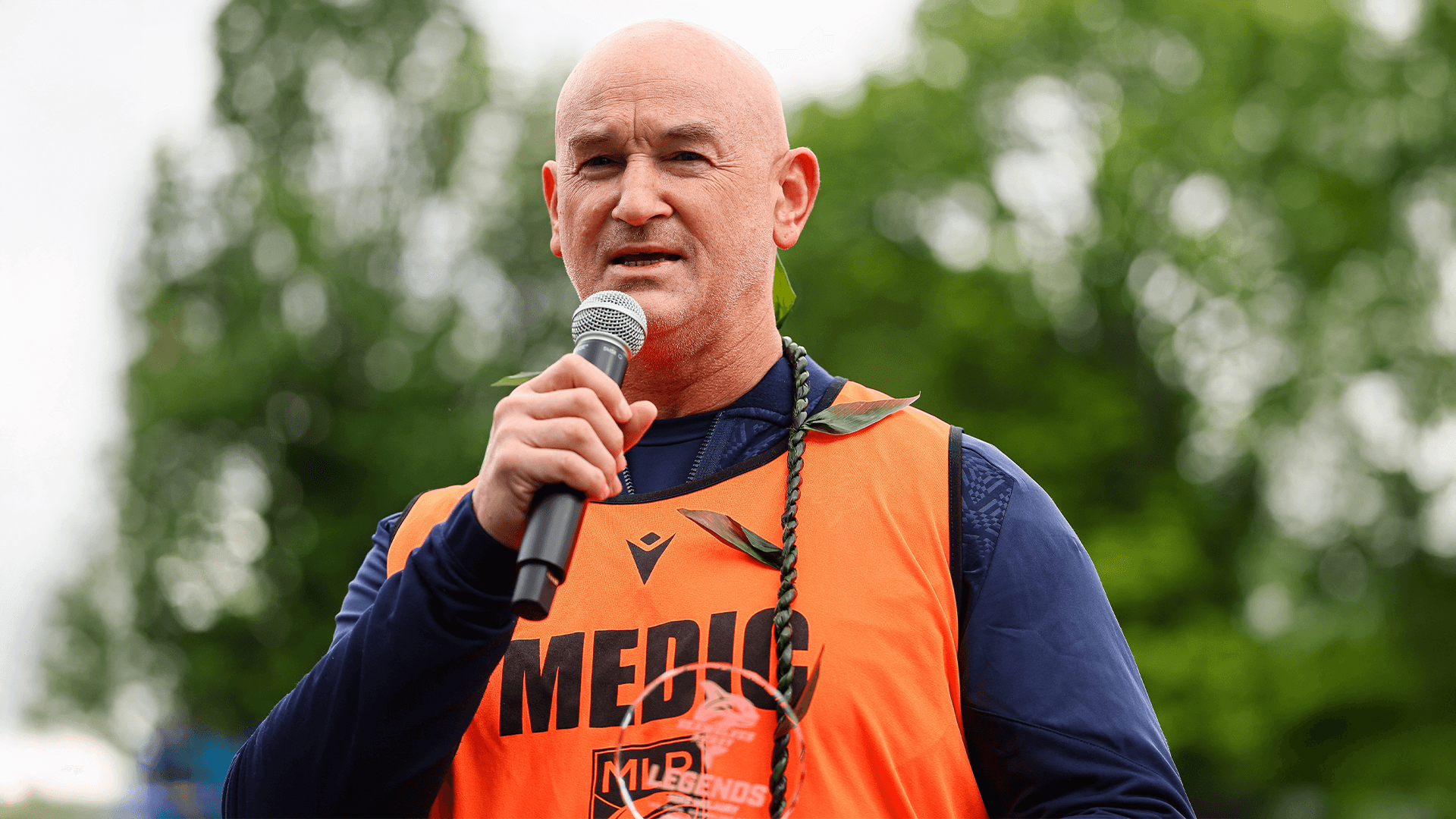
That moment hooked him. Six years later, McLaury is being honored as a Seattle Seawolves Legend. He’s the head athletic trainer who has been with the club from nearly the beginning, and who has logged more athletic training games covered than anyone else in Major League Rugby history.
McLaury grew up in sports medicine. His uncle owned four physical therapy clinics; his mother ran all of them. As a kid, he spent summers riding along with her to work, eventually becoming an exercise specialist and working with patients through high school. The environment shaped him early.
By the time he was playing American football at university and later professionally with the Graz Giants in Austria, the direction his life would take was already clear.
"I knew my calling was to serve people," he says. "My passion was on the sports side of therapy."
After returning to the United States, he built SPT Sports Physical Therapy from a single clinic into eight locations. The goal was never just to get athletes back to where they were before an injury, but to send them back better.
"Success for me is seeing people happy, smiling, and enjoying the process, even while recovering from an injury," he says.
When McLaury joined the Seawolves, he had something most medical staff don't have: a firsthand understanding of what it’s like to absorb contact for a living.
He played defensive line. Every snap was a collision, the kind of force most people experience once in a car accident and spend months recovering from. McLaury did it hundreds of times per season, for years.
"I was making contact constantly and having those small car accidents every down," he says.
That experience made him a better clinician. McLaury knows what it feels like to push through pain, and the difference between pain you can play with and damage you can't.
Rugby, he'll tell you, takes that demand to another level. Players absorb contact from multiple angles, at full speed, with no pads, for 80 minutes, then come back and do it again the following week. In his words, it's a gladiator sport.
"The demands on the body are different," he says. "We have to build resiliency in the tissue so it can handle the forces of players crashing into each other at high speed."
By the time fans arrive at the stadium, most of McLaury's day has already happened.
Treatment starts early with soft tissue work, cupping, stretching, mobility, and prehab exercises tailored to each player's injury history. From there, the team moves to the gym for strength and conditioning, then back to the facility for strapping.
Strapping is rugby's term for taping. The tape creates an external brace system for the body, giving joints extra stability before players go into contact. On match days, the volume goes up significantly.
After training, the team runs another treatment round for anything that came up during the session — McLaury and his colleagues are there for the same hours as the players, start to finish. Every injury then feeds into a broader conversation with medical director Dr. Virtaj Singh and rehab director Giannis: what comes next, whether imaging is needed, how to get the player back safely.
"It takes a village to take care of this team," McLaury says.
McLaury had spent years around athletics before joining the Seawolves. Football, hockey, basketball, lacrosse, volleyball. He understood how teams operate. Rugby felt different.
Beyond the postgame gatherings, he found something in the day-to-day culture he hadn't expected — someone always singing on the bus, players sharing odd facts about whatever city they're visiting, unique player rituals. One of the first he learned was buffalo: if a player catches you drinking with your right hand, (watch a group of rugby players at any social event and they'll all be holding drinks in their left hands), you have to finish the whole thing on the spot. McLaury learned this the hard way.
"I got called out a number of times," he says, laughing. "That's how I learned it."
Underneath the humor is something more meaningful.
"There's not really a superstar attitude," he says. "Everybody is there to leave it all on the pitch and do everything they can for one another."
In early 2026, the Seawolves headed to Cape Town for preseason training camp. For McLaury, it was one of the more memorable experiences of his time with the club.
The city was beautiful, the people were warm, and the heat was the opposite of Seattle in winter. From a medical standpoint this was a genuine advantage; warm tissue is more pliable and less prone to sprains and strains. But Cape Town also happened to be experiencing record temperatures that week, and a stomach bug worked its way through the entire traveling party one by one.
"I had to make runs to the pharmacy more often than I would care to," he says.
They managed it, got through the training camp, and made it home intact. McLaury would go back in a heartbeat.
McLaury has been to two national championship matches with the Seawolves. They didn't win either one. But reaching that stage, he says, is something most people never experience in their lifetime. The emotional weight of those runs, the wins that built toward them, the locker rooms afterward, stays with him.
"Being part of that is an emotional roller coaster," he says. "It's the kind of thing people look for in life, going through something so challenging but so rewarding."
When asked what it means to be honored as a Seawolves legend, he deflects the way people do when they genuinely mean it.
"I just try to give myself wholeheartedly to the team and the players," he says. "Being considered a legend is humbling. I'm super happy just to be part of it."
Six years in, more MLR games covered than anyone else in the league, and still showing up every morning before the players do. That's what a legend looks like.